

01
CBT Reframe
Names the distortion, offers a more balanced perspective, and suggests one manageable next step.
Reframer helps you meet an anxious thought with the response it actually needs — then stays with you long enough to turn the experience into something useful.
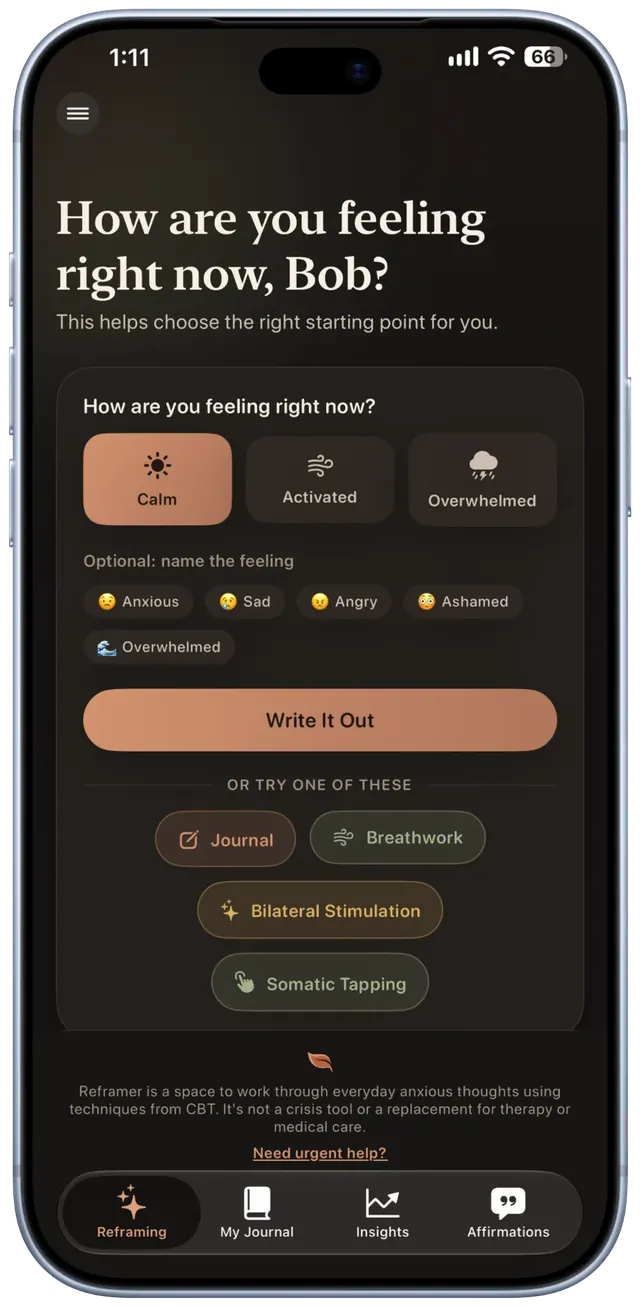
A quick arousal check-in helps you choose between writing, breathing, or bilateral haptic tapping. Regulation comes first when reflection would feel like too much. You can also explore our guide to breathing exercises for anxiety.
Name how activated you feel and choose the starting point that fits the moment.
Use gentle, haptic-paced breathing before writing or after a difficult session.
Try alternating bilateral haptic pulses when breathing alone is not landing.
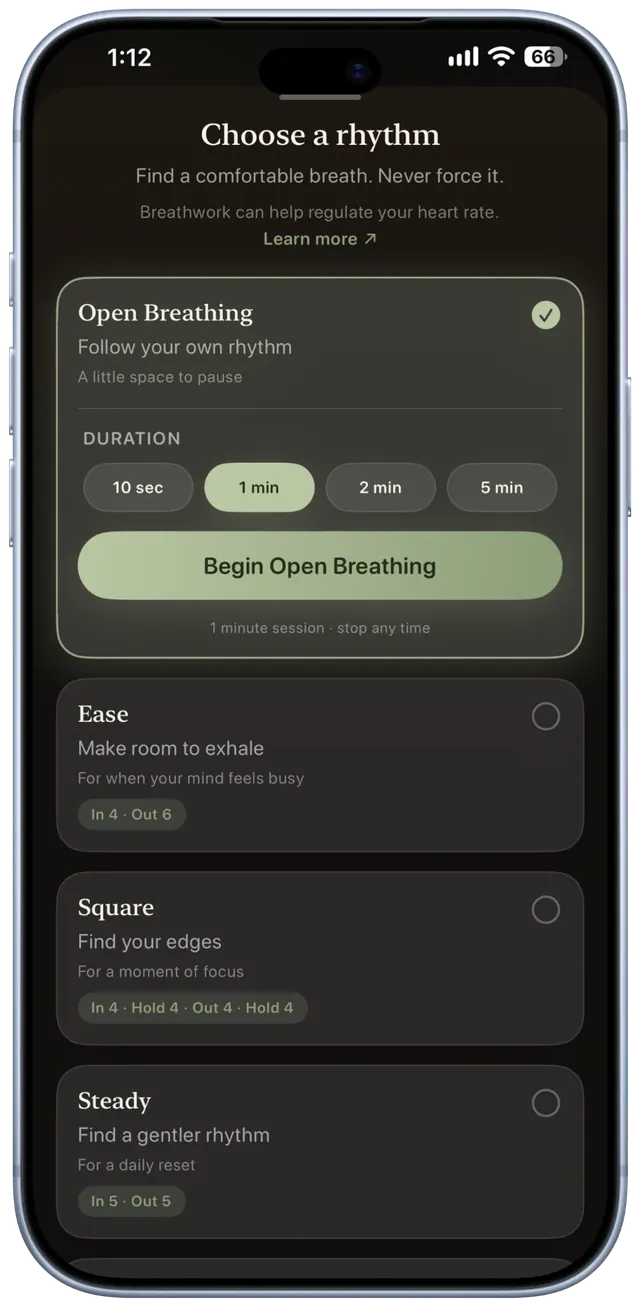
Find a comfortable breath.
Never force it.
Eyes closed. Phone down.
Let gentle haptics keep the pace.
The four-pathway router looks at what you wrote and chooses the approach that fits: a reframe, a practical plan, acceptance and grounding, or a real-world experiment. An offline fallback keeps the flow available without a signal.
Names the distortion, offers a more balanced perspective, and suggests one manageable next step.
Turns a real, solvable problem into practical steps instead of trying to reframe it away.
Makes room for grief, loss, and other moments where there may be nothing to fix right now.
Transforms a testable fear about the future into a small experiment you can learn from.
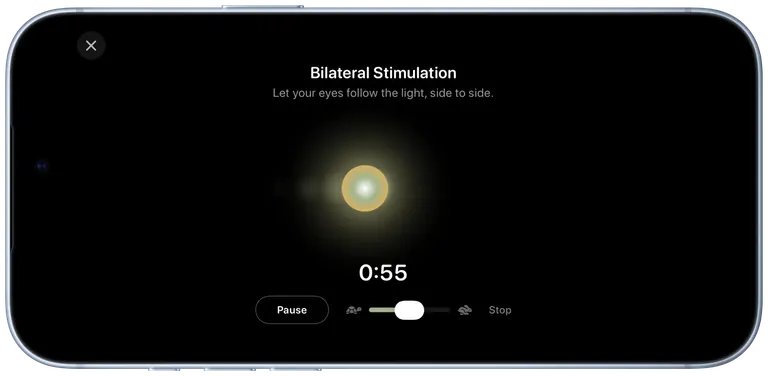
Follow a softly paced light from side to side, pause when you need to, and move at the speed that feels manageable. It is a brief grounding practice, not a replacement for EMDR therapy or professional care. Read more about bilateral stimulation and EMDR.
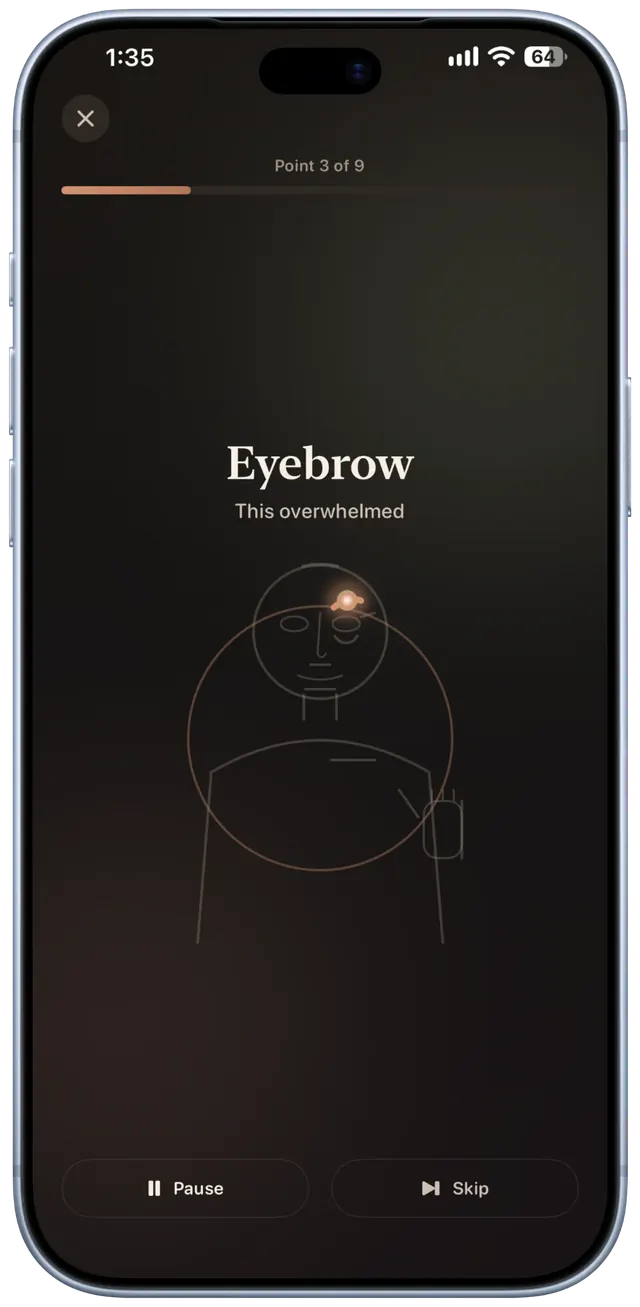
A calm, step-by-step tapping flow gives your attention somewhere concrete to go when your thoughts are moving faster than words. Skip a point, pause, or finish whenever you are ready. Learn more about somatic tapping.
Guided
Move through each point with one clear prompt at a time.
Flexible
Pause, skip, or leave the exercise whenever it stops helping.
Reframer follows the thought into real life, helping you compare what you feared with what actually happened.
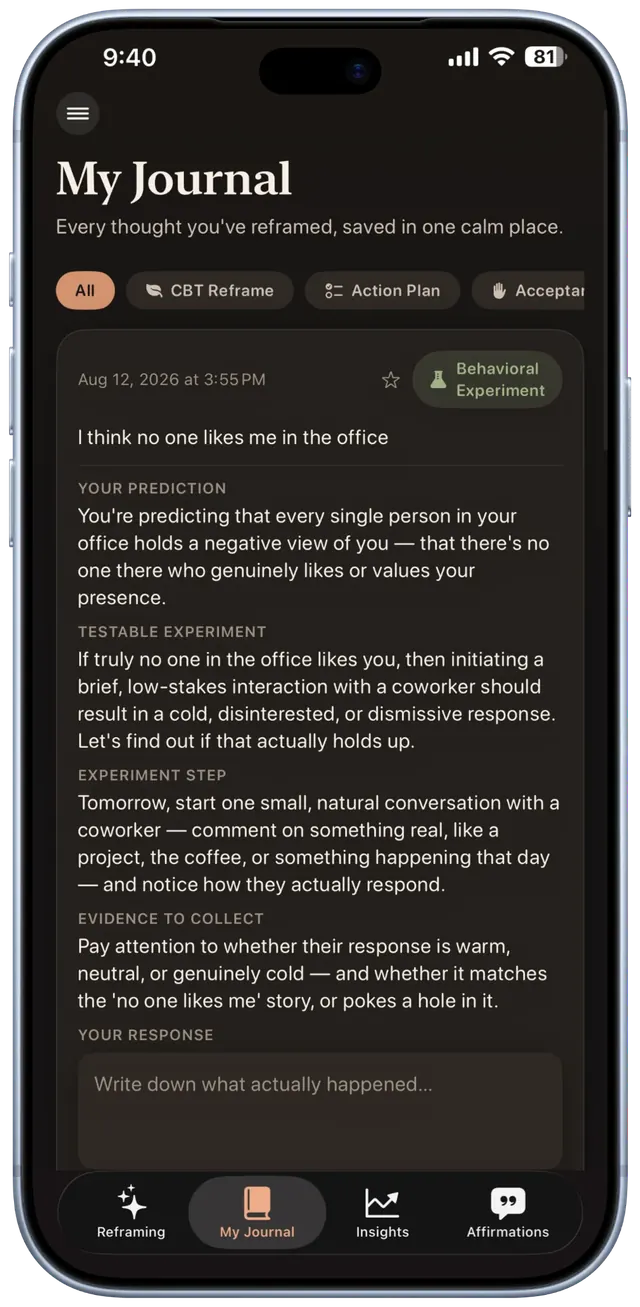
Finish with one small step that feels possible.
Reframer checks back roughly a day later.
Compare the feared outcome with what actually occurred.
Better-than-expected outcomes become proof you can revisit.
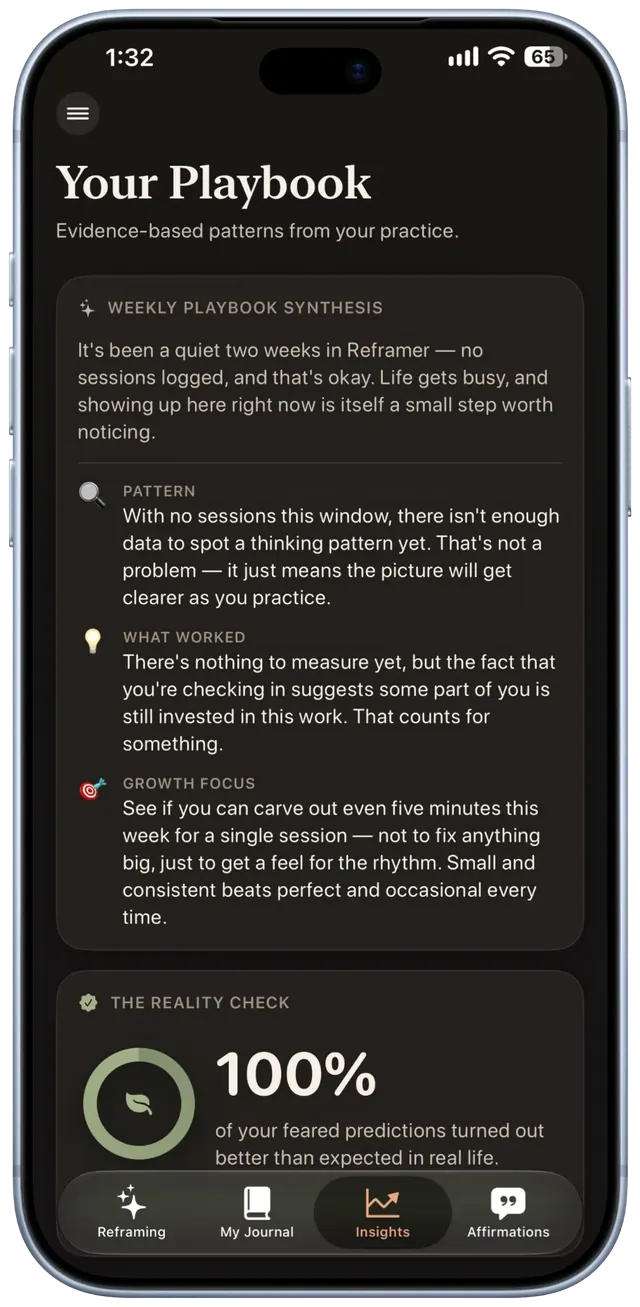
Weekly synthesis, recurring cognitive distortions, and real-world outcomes turn your journal into a clearer picture of the patterns shaping your emotional life.
Reframer is designed to feel closer to a locked notebook than a conventional health app: no ads, no data sold, and no use of your entries to train foundational AI models.
Start without creating an account. Guest entries remain on your device.
Protect your journal with Face ID or your device passcode.
Layered checks can surface crisis resources instead of generating a reframe.
Crisis resources for 20+ countries are available even without a connection.
Reflections are encrypted in transit. No personal information is shared with an AI model, and you decide what leaves your device.
Clear answers to the questions people often ask before beginning.
Reframer helps you slow down anxious or unhelpful thoughts, explore them with CBT-based prompts, regulate through breathing or somatic tools, and notice patterns over time.
No. Reframer is a private self-reflection companion. It is not a replacement for therapy, medical care, or crisis support.
Reframer offers a gentle visual side-to-side cue that you can pause, slow down, or stop at any time. It is a grounding exercise, not a substitute for EMDR therapy with a qualified professional.
Yes. You can begin in Guest mode without creating an account. If you decide to sign in later, optional sync can keep your journal and insights in step across your Apple devices.
Reframer is available across iPhone, iPad, Apple Watch, and Mac, with features designed for each device’s role in your routine.
Use Reframer without an account, or sign in when you want your journal, insights, and follow-throughs to stay in step across devices.
The complete reframing and journaling flow.
More room for reading, reviewing, and reports.
Guided breathing and quiet reminders on your wrist.
A calm space to review patterns and export.
One quiet system
iPhone
iPad
Apple Watch
Mac
Sync is always optional.
Affirmations and widgets
Small reminders, placed where you will actually see them.
Everything available today, grouped by the role it plays in your routine.
Choose Just Write, Just Breathe, or Tapping.
Long-exhale exercises with haptic pacing.
Alternating left and right pulses for grounding.
A response matched to the thought you entered.
Entries organized by the pathway that handled them.
An offline-first safety layer before reframing.
Your own record of fears that turned out differently.
A micro-action, a reminder, and the real outcome.
Mood, distortion, and time-of-day patterns with PDF export.
Begin privately, then sign in only if you want to.
Keep signed-in entries aligned across Apple devices.
Small reminders placed where you will see them.
Not shipped yet — but being built with the same care as everything above.
Reframing in the language you think in.
A path from self-reflection to real human support.
Additional structured exercises beyond the current pathways.
Give your next anxious thought somewhere gentler to land. No account is required to begin.
Download on the App StoreReframer is a self-reflection companion, not a crisis tool or replacement for therapy or medical care.